Printify Releases 2026 Guide to Launching a Home-Based Sticker
The new seven-step resource covers design, product selection, pricing, and traffic estimates to launch a sticker
Press Release Disclaimer: This is a press release distributed through the XPR Media network. It has not been independently verified by our newsroom.
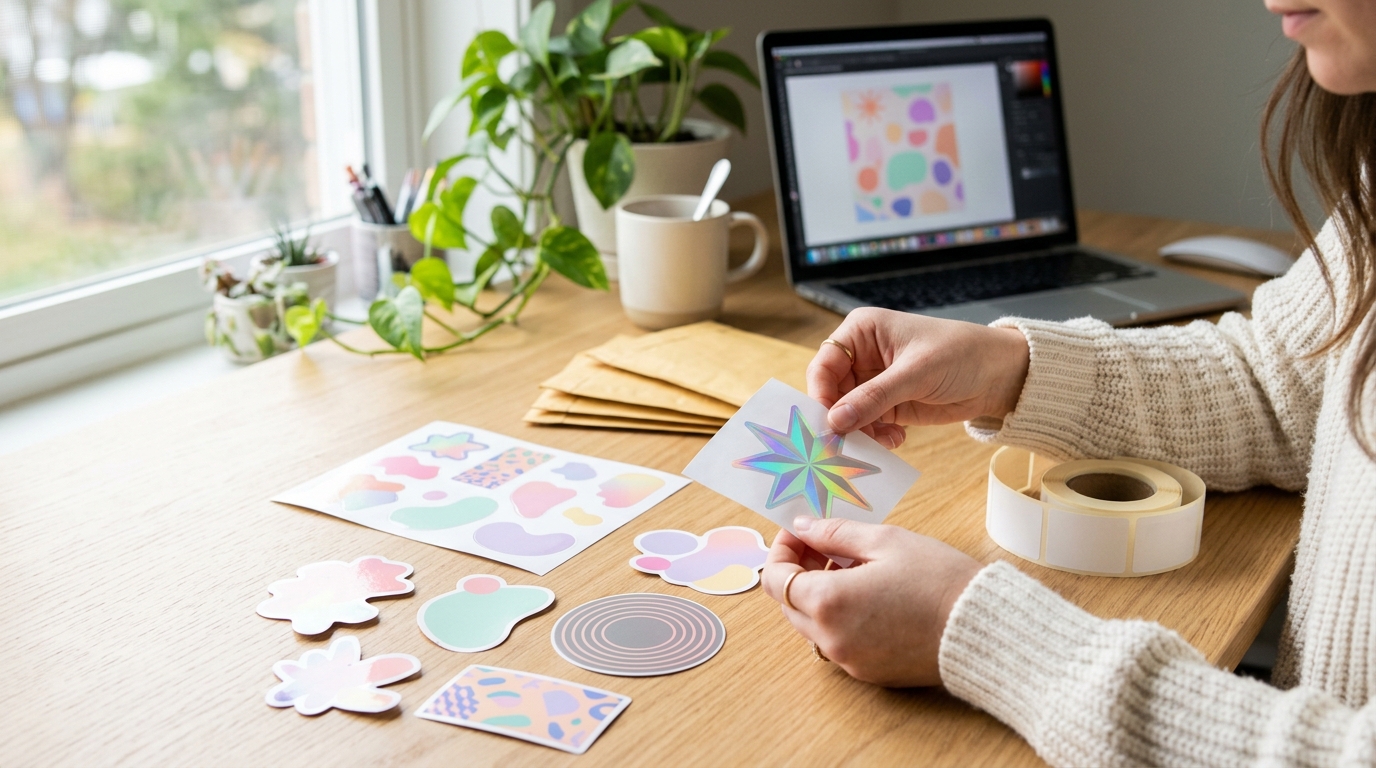

The new seven-step resource covers design, product selection, pricing, and traffic estimates to launch a sticker business with no upfront investment needed.
WILMINGTON, DE, UNITED STATES, October 8, 2026 /EINPresswire.com/ — Printify, a leading print-on-demand platform, has released a step-by-step guide to launching a sticker business from home in 2026. The resource walks new sellers through market research, design, product selection, sales channels, pricing, and promotion, and compares the costs of a print-on-demand model with a do-it-yourself setup. It reports that total startup costs range from $0 to more than $800 depending on the route chosen, and that established shops with a defined niche commonly reach $1,500 to $2,000 or more in monthly revenue.
A Low-Cost Category With Proven Demand
According to the guide, stickers remain one of the most accessible product categories for first-time sellers. It cites a CNBC report on Etsy seller Elyse Burns, who paid off debt by selling stickers and stationery and reported nearly $5 million in revenue across her shop last year. Printify notes that stickers sit within Etsy’s paper and party supplies category, one of the platform’s top six sellers, which together account for about 85% of Etsy’s sales, and that Pinterest searches for sticker sheets have stayed consistently high over the past year.
The resource breaks down what each route costs. A print-on-demand account carries no signup fee and no inventory, with expenses limited to per-order production, selling fees, and marketing. A home setup requires a cutting machine at $170 to $400, starter sticker paper or vinyl at $30 to $80, laminating sheets and cutting mats at $40 to $100, and an inkjet or dedicated sticker printer at $80 to $200 or more. Beginners commonly report $0 to $500 in monthly revenue during their first few months, the guide says, before a defined niche and consistent marketing lift results.
Seven Steps From First Design to First Sale
The guide outlines how to start a sticker business in seven steps, beginning with design. It recommends free tools such as Canva and Adobe Express for beginners, Illustrator or Affinity Designer for die-cut work, and artwork prepared as a 300 DPI transparent PNG with bold outlines, high contrast, and a palette of four to six colors. Sellers are advised to sign up for free, browse more than 20 sticker styles in the Printify Catalog, and launch with two to three products, such as sticker sheets and die-cut stickers for planners, holographic stickers for laptops and bottles, bumper stickers for outdoor gear, and label rolls for small-business packaging.
Designs are then uploaded to or built in Printify’s Product Creator, which supports AI image generation, thousands of free design elements, Shutterstock licensing, one-click background removal, up to 20 layered elements per design, reusable templates, and realistic mockups. The guide recommends ordering a sample before publishing. From there, sellers connect a sales channel, with direct integrations for Etsy, Shopify, TikTok Shop, eBay, and WooCommerce, so orders sync automatically to a Print Provider for production and shipping. Prices should cover base production cost, channel fees, and overhead, and Printify’s Sold product price data shows the price point where similar custom stickers sell most often.
“Stickers are one of the lowest-risk ways to test a product idea. With print on demand there is no inventory to buy, so sellers can launch two or three designs, see what resonates, and scale up,” said Davis Sarmins, Director of Growth Marketing at Printify.
What Sells and How to Grow
Drawing on Everbee data for Etsy, the resource lists the best-performing formats: deco journal sheets, reading journal trackers, retro and Y2K aesthetic sheets, coquette designs, personalized name sheets, seasonal and holiday designs, and printable packaging labels for small businesses. It adds that most top sellers use matte vinyl. For 2026, the guide points to hobby-specific niches, book trope stickers, astrology and tarot packs, minimalist line art, and career-themed designs, and directs sellers to its companion roundup of the best sticker design ideas for further inspiration.
On growth, Printify advises focusing on one traffic channel at a time across social platforms, search optimization, and email, tracking sales by product each month, retiring or refreshing any design that has not sold in three months, and expanding winners into variations, bundles, digital printables, and bulk orders.
About Printify
Printify is a leading print-on-demand platform that connects ecommerce merchants with a global network of Print Partners. With the industry’s largest Catalog, free AI design tools, and seamless integrations with major ecommerce platforms, Printify enables sellers to scale custom product businesses without upfront costs.
Maria Kennedy
Printify Inc.
Visit us on social media:
LinkedIn
Instagram
Facebook
YouTube
TikTok
X
Legal Disclaimer:
EIN Presswire provides this news content “as is” without warranty of any kind. We do not accept any responsibility or liability
for the accuracy, content, images, videos, licenses, completeness, legality, or reliability of the information contained in this
article. If you have any complaints or copyright issues related to this article, kindly contact the author above.

Media gallery