Prestige Auto Collision Highlights the Importance of ADAS Calibration After BMW Collision Repair
Mission Viejo CA - October 07, 2026 - PRESSADVANTAGE - Prestige Auto Collision has published new consumer guidance
Press Release Disclaimer: This is a press release distributed through the XPR Media network. It has not been independently verified by our newsroom.

Mission Viejo CA – October 07, 2026 – PRESSADVANTAGE –
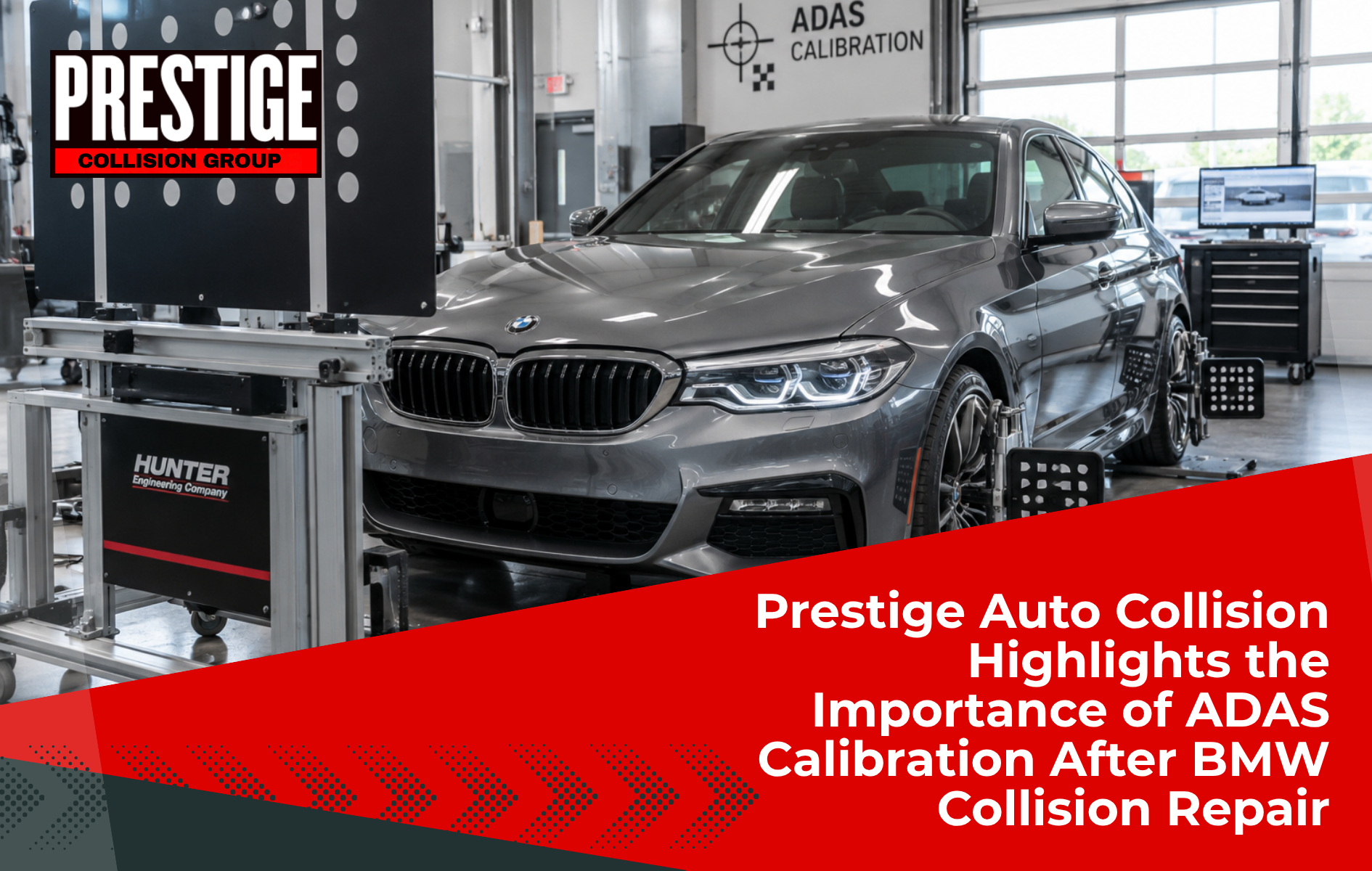
Prestige Auto Collision has published new consumer guidance explaining when Advanced Driver Assistance Systems, or ADAS, calibration may become part of BMW collision repair. The resource focuses on a common point of confusion for vehicle owners: why an estimate may include calibration or diagnostic procedures even when the most visible collision damage involves a bumper, windshield area, mirror, or another exterior component.
The new resource, “ADAS Calibration After BMW Collision Repair,” expands Prestige Auto Collision’s BMW collision repair information with a focused explanation of how physical repairs can intersect with cameras, radar units, sensors, and related driver-assistance technology. It also distinguishes calibration from diagnostic scanning, two procedures that can appear together on modern collision repair documentation but serve different purposes. Pasted markdown
ADAS is a broad term for technologies that assist drivers with functions such as lane-related assistance, parking assistance, collision warnings, and other features. The equipment installed varies among BMW models, model years, and vehicle configurations.
Depending on the BMW, driver-assistance components can be positioned in or near windshields, bumpers, grilles, mirrors, and other areas that may be affected during a collision or disturbed during repair.
The guidance emphasizes that a collision does not automatically mean every ADAS component requires calibration. The applicable procedures depend on the equipment installed, the area affected, the components repaired or replaced, and the repair information associated with the individual BMW. Pasted markdown
This distinction is one of the primary reasons Prestige Auto Collision developed the October resource.
From a consumer perspective, replacing or repairing a visibly damaged exterior component can appear separate from the vehicle’s electronic systems. On modern vehicles, however, a camera, radar unit, sensor, or its mounting location can be associated with the same area being repaired.
A front bumper provides a useful example.
Depending on vehicle configuration, the area can contain or be located near brackets, wiring, mounting points, radar units, or other electronic equipment. Damage to the bumper does not prove that nearby ADAS equipment has also been damaged.
Instead, technicians can identify the systems installed on the individual vehicle and review the components involved in the repair before determining whether additional procedures apply.
Mounting position can also matter.
A camera or radar unit may remain physically intact after an accident while a bracket, mounting location, or surrounding component has been affected. The condition of those related components can therefore be relevant when researching the repair requirements for the vehicle.
The new guidance also clarifies the difference between diagnostic scanning and calibration.
Diagnostic scanning communicates with electronic vehicle modules and can retrieve diagnostic information associated with those systems.
Calibration, when specified, establishes or verifies operating parameters or positioning associated with certain cameras, radar units, sensors, or other driver-assistance components.
Because the procedures perform different functions, completing one does not automatically substitute for the other. The applicable BMW repair information determines which operations belong in the repair plan. Pasted markdown
Repair sequence is another topic covered in the resource.
Physical repairs to damaged body components or mounting areas may need to be completed before an applicable calibration procedure. This allows the electronic portion of the repair to be considered in relation to the restored physical components rather than as a separate task disconnected from the collision work.
Component replacement can present a similar situation.
Installing a replacement camera, radar unit, sensor, or related component does not necessarily describe every operation associated with that repair. Depending on the specific BMW procedure, additional steps can include initialization, programming, scanning, calibration, or verification.
The resource does not suggest that all of these operations apply to every replacement. Instead, it explains why consumers may see more than one electronic procedure associated with a single component on a collision repair estimate.
Prestige Auto Collision also provides broader information about manufacturer-specific repair considerations through its OEM-certified repair resource.
OEM refers to the Original Equipment Manufacturer. In the context of collision repair, manufacturer repair information can help identify component-specific procedures, repair limitations, diagnostic operations, calibration requirements, and other technical steps associated with the individual vehicle.
Vehicle geometry is another consideration discussed in the BMW ADAS guidance.
Some driver-assistance technologies operate in relation to vehicle direction or positioning. When a collision or repair involves areas associated with vehicle geometry, applicable BMW procedures can identify how mechanical repairs, body work, diagnostics, and calibration relate to one another.
The guidance also addresses a situation that can be confusing for drivers after a collision: the absence of a dashboard warning.
A vehicle may not display a warning that describes every repair procedure associated with a particular component or operation. For that reason, dashboard messages alone do not determine whether calibration is required.
The same principle applies when a vehicle appears to drive normally following an accident. How the vehicle feels to the driver provides useful information, but it does not replace the repair procedures associated with the specific vehicle and work performed. Pasted markdown
To make the process easier for consumers to understand, the new resource organizes BMW ADAS considerations into four basic stages.
The first is identifying the exact BMW and its installed driver-assistance equipment. The second is documenting the collision and determining whether relevant electronic components, mounting locations, or surrounding areas are involved.
The third stage is completing the applicable physical and mechanical repairs. The fourth is completing the diagnostic, calibration, or verification procedures specified for the repair.
This framework is intended to help BMW owners understand why modern collision repair documentation can contain operations that are not visible when looking at the finished exterior of the vehicle. Pasted markdown
The resource is particularly useful for owners reviewing estimates containing terms such as diagnostic scan, camera calibration, radar calibration, initialization, or system verification.
Rather than treating those terms as interchangeable, the guidance explains that each can describe a different part of the repair process.
It also helps consumers distinguish between an electronic component being located near collision damage and that component actually requiring an additional procedure.
For example, a bumper, mirror, or windshield area can be close to driver-assistance equipment. That proximity alone does not establish that the electronic component is damaged or requires calibration.
The repair plan instead reflects the vehicle configuration, components involved, and procedures associated with the work being performed.
Documentation can help connect the physical and electronic stages of the repair.
The repair plan identifies the affected components and required operations, while applicable diagnostic and calibration documentation can provide a record of electronic procedures completed during the repair.
For BMW owners, the new October resource provides a practical explanation of why restoring visible collision damage and addressing vehicle technology can sometimes be connected parts of the same repair.
Its central message is not that every BMW collision requires ADAS calibration. Instead, calibration becomes relevant when the vehicle’s equipment and applicable repair procedures identify it as part of the work being performed.
Prestige Auto Collision provides collision and auto body repair services at 23726 Via Fabricante, Mission Viejo, CA 92691, United States. The October consumer resource adds a BMW-specific ADAS topic to the company’s repair information, giving owners a clearer reference for understanding calibration, diagnostic scanning, component positioning, and repair sequencing after a collision.
###
For more information about Prestige Auto Collision, contact the company here:
Prestige Auto Collision
Darrell Gates
949 581 3702
darrell@prestigecollisiongroup.com
23726 Via Fabricante, Mission Viejo CA, 92691